
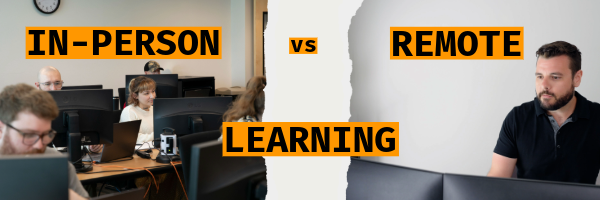
Choosing the right learning format is a major step, especially when you're considering a new career. Whether you're balancing work, family, or other obligations, understanding the difference between online and in-person lifestyle.
Why This Decision Matters for You
If you're exploring career training as a college alternative, contemplating a major job change, or looking at your next steps after serving in the military, how you learn is as important as what you learn. Flexible, accessible education options mean you don't have to put your life on hold to build new skills or credentials. But choosing the right format ensures you succeed and see a return on your investment.
Why Learning Formats Have Shifted
Advancements of technology, recent changes in the workplace, and the pandemic have all changed how people approach learning. With the rising popularity of remote work and digital collaboration, online learning is more practical and desirable for many people. At the same time, traditional in-person classes still appeal to those who prefer face-to-face support and structured routines.
Pros of Online Learning
Online learning offers a flexible, convenient pathways for career changers. Here are some key benefits:
- Work around your schedule and commitments
- Learn from anywhere
- Save money on commuting and housing
- Shorten then time spect on school-related travel
- Go at your own pace, with options for personalized instruction
- Prepare for the realities of remote and hybrid IT work
Flexibility of your schedule
Online learning allows you to work around your existing commitments, whether that's a job, family, or other priorities. You can log in and complete assignments at times that fit your rhythm, not someone else's.
Flexibility of your location
No need to move or commute. Study from home, a local coffee shop, or while traveling. Wherever you have a internet connection, you can learn.
Lower costs
Online students skip commute costs, campus parking fees, and often avoid paying for on-campus housing or daily childcare.
Time savings
Without the need to drive to campus or sit in traffic, you can put more hours into learning.
Self-paced and potentially personalized learning
Move at a speed that matches your abilities. Many online programs offer tailored resources or adaptive lessons if you need more practice on certain skills.
Develops virtual collaboration skills for remote jobs
You'll build digital communication skills with peers and instructors, preparing you for modern workplaces that depend on remote teamwork and virtual meetings.
Cons of Online Learning
Despite its advantages, online learning isn't right for everyone. Here are some challenges to keep in mind:
- Demands self-motivation and solid time management
- Can feel isolating or lacking in social interaction
- You’ll need reliable technology and internet access
- More temptations or distractions at home
- Some skills are tough to master without hands-on practice
Requires high self-motivation, time management, and discipline
Working online means there's no one looking over your shoulder, so you need to manage your study time, assignments, and deadlines independently.
Fewer opportunities for peer support
It can be harder to form connections, ask questions in real time, or build a network when you're not sharing a physical classroom with peers.
Technology requirements
You'll need a dependable device and a fast internet connection. Technical issues can disrupt your learning if you don't have the right setup.
Distractions at home
Home comes with its set of distractions, from family to chores to entertainment. Staying focused requires strategies and boundaries.
Some careers may require hands-on, physical training
Fields that need access to equipment, labs, or supervised practice may be harder to learn virtually. Make sure your career path is suited for online learning.
Pros of In-Person Learning
In-person learning offers structure and support you don't get online. Here are a few advantages:
- Built-in schedules keep you on track
- Fewer distractions in a controlled learning environment
- Face-to-face networking and relationships
- Direct access to physical resources, labs, and gear
- Immediate feedback and help from instructors
Built-in structure & routine
With scheduled classes and set meeting times, your days have a natural rhythm, making it easier to stay organized and accountable.
Less distractions
A classroom limits outside distractions, helping you focus fully on the task at hand.
Richer peer interaction and network building
Getting to know your classmates in person builds stronger communication skills and can lead to lifelong friendships or professional contacts.
Access to campus resources & equipment
In-person learning means direct access to campus hardware, tools, labs, and study spaces that might otherwise be unavailable.
Easier access to immediate support & feedback
With instructors on hand, you can get answers and guidance the moment you need it, which speeds up your progress.
Cons of In-Person Learning
Traditional classroom learning isn't always a perfect fit, especially for adults with packed schedules. Watch out for these downsides:
- Less control over your daily routine and free times
- Extra costs for transportation, housing, parking, childcare
- Forced to keep the same pace as the class
- Requires you to live near campus or commute
Less flexibility in your schedule
Classes are often set at specific times each day or week, limiting your ability to balance other priorities or responsibilities.
Higher costs
You're not just looking at tuition, but also travel, food, and possibly additional childcare or housing expenses.
Less control over pace and style of learning
In a group setting, learning moves at a single speed. Sometimes too fast, other times too slow for your needs.
Remove Learning vs Classroom Learning: Which One Fits Your Situation?
Not sure which path to choose? Start with your personal needs, learning style, and career ambitions. The best format is the one that aligns with your life, and helps you reach your goals faster.
Online vs In-Person Learning Decision-Making
Ask yourself:
- Do I learn best independently or with in-person guidance?
- How much structure do I want in my daily routine?
- Do I need flexibility for work, family, or other commitments?
- Can I keep myself motivated and on track with limited supervisioin?
- Do I have the technology and space to study from home?
- Is my career path compatible with remote learning, or do I need access to campus resources?
Scenario 1: High schooler skipping college, exploring career training
If you don’t want the time or cost of traditional college, both online and in-person training can launch you into the workforce faster. Online options let you start even while working a part-time job, while in-person brings hands-on practice and a community of peers. Learn more here: IT Training Program as a College Alternative
Scenario 2: You have a dead-end job and want a career change
If you’re working long hours or juggling responsibilities, online courses can fit around your schedule and save you commute costs. But if you need extra support, routine, or on-the-spot answers, in-person learning can make the transitional smoother. Learn more here: Career Change to IT
Scenario 3: Veteran leaving the military and entering the civilian job force
Many veterans thrive in in-person, hands on courses that mimic the structure and camaraderie found in the service. But self-motivated learners with computing obligations many benefit from the flexibility of online options. Consider which environment mirrors you preferred learning style. Learn more here: IT Training for Veterans
Tips to Succeed in Either Format
No matter which route you choose, your success comes down to preparation and follow-through.
For online learners
- Set a dedicated study space
- Plan your week ahead and stick to a schedule
- Limit Distractions – turn off notifications and set boundaries with others at home
- Reach out to instructors and peers for helps
- Take breaks and move around to avoid burnout
For in-person learners
- Arrive prepared with questions and assignments completed
- Take advantage of on-campus resources
- Build relationships with classmates and instructors
- Participate actively in class discussions and labs
- Review and organize notes after each session
Summary
Whether you choose online or in-person training, both paths have unique strengths and drawbacks, and the best choice is the one that works or your life right now. Take an honest look at your needs, learning style, and career goals before you decide. Ready for a new career in IT? Contact us here. Discover how Centriq’s career training program can help you make the switch.
Start your IT journey now with Centriq’s Cybersecurity Specialist Program!